Home / Emergency AC Repair
Emergency AC repair · Brunswick, GA
Emergency AC Repair in Brunswick, GA
When the AC quits in a Glynn County summer, the house can heat up fast. Here’s how to tell a true emergency from a next-day repair, what to do in the first hour, and how to get a technician out fast.
- Urgent heat calls prioritized
- Written price before work
- Brunswick · St. Simons · Jekyll
Is it an emergency?
What Counts as an AC Emergency in Brunswick
Not every AC failure needs a technician tonight. This table sorts the most common situations by urgency so you know whether to call now, book the first open window, or leave the unit off until it’s inspected.
| What’s happening | Urgency | What to do right now |
|---|---|---|
| A hot, rising indoor temperature with an elderly person, infant, pregnant woman or someone ill at home | Emergency | Call now. If anyone shows signs of heat illness, call 911 first. |
| Burning or electrical smell from vents, the air handler or outdoor unit | Emergency | Turn the system off at the thermostat and breaker, then call. |
| Water dripping from a ceiling, light fixture or near wiring | Emergency | Shut the system off, move valuables, call. |
| Breaker trips again after one reset | Emergency | Leave the breaker off and call. |
| Outdoor unit buzzing loudly but the fan isn’t turning | Same day | Turn cooling off to protect the compressor; call for the first open window. |
| AC running but blowing warm air, healthy adults at home | Same or next day | Change the filter, check the thermostat, close blinds, then book. |
| Ice on the copper lines or indoor coil | Same or next day | Cooling off, fan on to thaw; book a visit. |
| House cool but humid and sticky | Book a visit | Set the fan to AUTO and schedule a diagnosis. |
| Unit was under flood water or hit by storm debris | Do not run it | Keep it off, photograph it for insurance, call for an inspection. |
When should I call for emergency AC repair?
Call right away when indoor heat is rising into the high 80s and someone vulnerable is home, or when there’s a safety warning: a burning smell, water near wiring, or a breaker that trips again. A unit that simply stopped cooling while healthy adults are home can usually wait for the first open same-day or next-day window.
Is a broken AC an emergency for landlords in Georgia?
If a rental came with AC, the landlord is responsible for repairing it, and under Georgia’s Safe at Home Act (leases signed or renewed on or after July 1, 2024) rentals must be fit for human habitation. Tenants should report the outage in writing right away; landlords and property managers should treat summer outages with vulnerable occupants as urgent.
Before the technician arrives
What to Do in the First Hour
These steps protect the people in the house first and the equipment second.
01
Turn the cooling off
Set the thermostat to OFF. Running a system with a failed capacitor or fan motor can overheat the compressor and turn a modest repair into a very costly one.
02
Check the breaker once
If the AC or air handler breaker tripped, reset it one time. If it trips again, leave it off. Repeated resets can damage the compressor or overheat wiring.
03
Cool the people, not the house
Close blinds on sunny windows, move everyone to the lowest, shadiest room, keep water within reach and use cool, damp cloths on the neck and wrists. Fans help only while the indoor temperature stays below about 90°F. Above that, a fan can raise body temperature, so head to an air-conditioned place instead.
04
Gather the details
Note what the unit was doing, any sounds or smells, the brand and age (on the outdoor unit’s data plate), and take a photo. It speeds up the diagnosis and the quote.
Health first
Heat Illness Signs to Watch For While the AC Is Out
Brunswick summers bring long stretches of highs above 82°F and nights that stay above 72°F, so a house without AC doesn’t cool off overnight. Nearly one in five Brunswick residents is 65 or older, and older adults, infants, pregnant women and people with heart or lung conditions are at the highest risk.
If anyone at home shows the signs below, deal with the person before the equipment.
Heat exhaustion
Heavy sweating, cold and clammy skin, nausea, dizziness, muscle cramps, weakness or fainting. Move the person somewhere cooler, loosen clothing, sip water and use cool wet cloths. Get medical help if symptoms get worse or last longer than an hour.
Heat stroke
A very high body temperature, confusion, slurred speech, hot red skin, a fast strong pulse, or losing consciousness. This is a medical emergency: call 911, move the person somewhere cooler and cool them with wet cloths while you wait.
Storms and outages
After a Storm or Power Outage
Some of the most common emergency calls in the Golden Isles come right after the power comes back.
When the power comes back
Leave the thermostat OFF until power has been steady for a few minutes, then turn cooling back on. Power flickers and surges when the grid restarts are hard on control boards and compressors.
If the unit was under water
Don’t turn it on. Flood water and salt can short the electrical parts and the controls. Photograph the unit and the water line for your insurer, then have it inspected before it runs again.
If you’re using a generator
Never run a generator indoors, in a garage or near windows, because of carbon monoxide. Most portable generators can’t start a central AC; a technician can tell you what your system needs.
Hurricanes and tropical storms such as Matthew, Irma, Idalia and Helene brought flooding, debris and long outages to coastal Georgia. If a storm is coming, turn the AC off at the breaker before the power goes out and clear loose items away from the outdoor unit.
On site
What Happens During an Emergency AC Visit
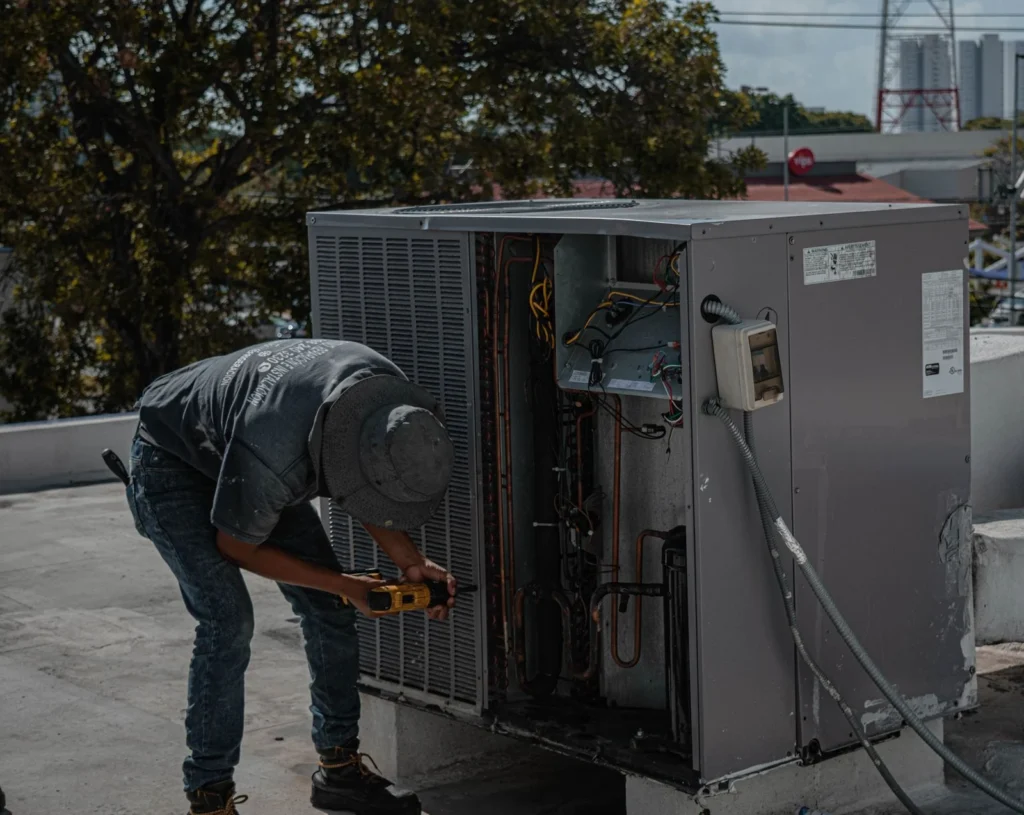
An emergency visit follows the same diagnose-first steps as any repair, in a tighter order: make it safe, find the failure, get cooling back, and only then talk about anything bigger.
- Safety check first: power, wiring, water near electrical parts, and any burning smell.
- Fast electrical tests: capacitor, contactor, fan motor and breaker, the parts that cause most no-cool emergencies in July and August.
- Written price before the fix: even at 9 p.m., you see the price before a part is replaced.
- Temporary vs. permanent: if a major part has failed on an older system, you get the option to restore cooling now and decide on replacement later, when it’s not 95°F.
Pricing
How much does emergency AC repair cost?
The repair itself costs about the same as a daytime repair: roughly $150–$400 for a capacitor and $100–$450 for a contactor nationally. What changes is the visit fee. Nights, weekends and holidays in peak summer usually carry a higher service or after-hours fee, so ask for that number before you book.
Questions to ask before an after-hours visit
- What is the after-hours or emergency service fee?
- Is the fee credited toward the repair if I go ahead?
- Will I get a written price before any part is replaced?
- If it’s a major failure, can you restore cooling tonight and quote the bigger job later?
- Does the technician carry common parts like capacitors and contactors?
While you wait
Fans, Cooling Centers and the Safe Way to Wait Out a Hot Afternoon
The wrong comfort trick can make a hot house more dangerous.
The CDC says plainly not to rely on a fan as your main way of cooling down in extreme heat. Fans move air and feel pleasant, but they do not lower your body temperature. Its guidance adds that fans are fine only when indoor temperatures are below 90°F, and that above that level a fan can increase body temperature.
| Do | Avoid |
|---|---|
| Move to the coolest room, usually low and shaded, and close blinds or drapes on sunny windows | Standing in front of a fan in a very hot room and assuming it is enough |
| Drink water steadily, before you feel thirsty | Alcohol and drinks high in sugar or caffeine, which can work against hydration |
| Take cool showers or baths, and use damp cloths on the neck and wrists | Cooking with the oven or stove, which adds heat to the house |
| Go somewhere air-conditioned, such as a library, a mall or a friend or family member with working AC | Staying in a hot house with a baby, an older adult or someone who is unwell |
| Check on neighbors and relatives who live alone | Waiting to see whether the system fixes itself |
If you need a cooling shelter, the CDC suggests dialing 2-1-1 or contacting your local health department or emergency management agency to find one. If anyone shows signs of heat illness such as confusion, fainting, very hot dry skin or vomiting, call 911. The CDC puts the toll plainly: about 1,220 people in the United States die from extreme heat every year, and those deaths are preventable.
Storm season
Hurricane and Tropical Storm Season: Protecting Your AC Before and After
Hurricane season runs through the end of November, so storm prep belongs in any Glynn County AC plan.
Before a storm
- Trim branches near the outdoor unit months ahead, since wind can snap them onto the unit or the roof
- If you will evacuate or ride out the storm, switch the AC and air handler breakers off at the panel
- If floodwater is a concern, ask about an elevated platform for the outdoor unit
- If you cover the unit during the storm, remember to remove the cover before it runs, because running a covered unit can damage the compressor
- Ask about an HVAC surge protector, which is a modest cost compared with replacing a control board
After a storm
- Do not switch the system on right after the storm passes. Inspect first
- Look at the outdoor unit for cracks, shifting, debris, standing water and signs of salt or flood damage
- If the unit or air handler was flooded, keep it off at the breaker and have it inspected by a professional before restarting
- Hidden electrical damage can cause shock, even if the unit seems to run
- Call for an inspection even if the system starts, when floodwater reached it
Salt water is especially hard on equipment, and a unit that sat in it can fail days or weeks after it appears to work. See our maintenance guide for coil care and our central AC repair guide for what happens after a power surge.
Before you call
What to Have Ready When You Call for Emergency AC Service
A two-minute prep gets you an accurate arrival window and a faster fix.
About the people
- Is anyone elderly, an infant, pregnant, ill or on medication that heat affects?
- Are there pets in the house?
- Is there somewhere cooler to go if the visit is delayed?
About the system
- What was it doing when it stopped: running warm, humming, silent, leaking?
- Any ice, water, burning smell or breaker trip?
- Brand, approximate age and a photo of the outdoor unit data plate
About the property
- House, condo, rental or business, and whether the unit is on the ground, a roof or a stand
- Gate codes, dogs, parking and who will be there
- If you are a tenant, the landlord or property manager contact
About timing
- Whether a storm or outage happened before it failed
- When you last had it serviced
- Whether you can be reached by phone while the technician is en route
You can also use our request form to send these details ahead of the call.
Every kind of property
Emergency AC Help for Homes, Rentals and Island Properties
Homes with vulnerable family members
Tell us who’s at home when you call. Calls with elderly residents, infants, or anyone with a medical condition are prioritized.
Rentals and apartments
Tenants: report the outage to your landlord in writing and keep a copy. Landlords and property managers: you get photos and written findings for your records.
Vacation rentals on St. Simons and Jekyll
A dead AC on check-in day becomes a refund. Share gate codes, lockbox details and the guest schedule so the visit fits around the stay.
Emergency AC FAQs
Emergency AC Repair Questions
Should I keep running my AC if it’s blowing warm air?
No. Turn it off. If the outdoor fan or compressor isn’t running properly, continuing to run it can overheat parts and turn a small repair into a compressor replacement.
How fast can a technician get to me in Brunswick?
It depends on the time of day, the season and where you are. Call for the next open arrival window; in-town Brunswick addresses are usually quicker to reach than the islands at peak traffic.
Can I just reset the breaker and keep going?
Reset it once. If it trips again, something is drawing too much current, often a failing compressor, motor or a wiring short. Leave it off and call.
What if my AC stops working at night?
Turn it off, cool the people with fans and water, and call. If no one at home is vulnerable and there’s no burning smell or water near wiring, a first-thing-in-the-morning visit is usually fine and can cost less than an after-hours call.
Will homeowners insurance pay for an emergency AC repair?
Usually not for wear and tear. Storm, lightning or flood damage may be covered depending on your policy. Photograph the unit before any work and call your insurer.
Is it safe to sleep in a house without AC in the summer?
For healthy adults with fans, water and open shade, usually yes for a night. For older adults, infants or anyone with heart or lung conditions, a hot house overnight can be dangerous: go somewhere cooler and call for help.
AC Down Right Now?
Tell us what the unit is doing and who’s at home. You’ll get the next open arrival window and the visit fee before anyone heads your way.