

AC Repair · Brunswick, St. Simons Island & Jekyll Island
AC Repair in Brunswick, GA
AC not cooling, leaking, iced over or dead in the July heat? AC Repair Brunswick repairs central air conditioners, heat pumps and mini-splits across Brunswick, St. Simons Island, Jekyll Island and the rest of Glynn County. You get a clear diagnosis, a written price before any work starts, and repairs that account for salt air and coastal humidity.
- Written price before any work
- You see the failed part
- Salt-air corrosion check
- Brunswick · St. Simons · Jekyll
Quick answer
AC repair in Brunswick, GA usually starts with a diagnostic visit (about $75–$200 nationally), then a fixed price for the fix. The most common repairs here are capacitors, contactors, clogged drain lines and refrigerant leaks. Salt air, long humid summers and older homes make outdoor coils and electrical parts fail sooner than inland.
Why Brunswick homeowners call us
What You Can Expect When You Call Us
01
Safe checks first
A real person asks what the unit is doing, how old it is, and walks you through two or three safe checks first (breaker, filter, thermostat). Sometimes that fixes it and you save the visit.
02
A set arrival window
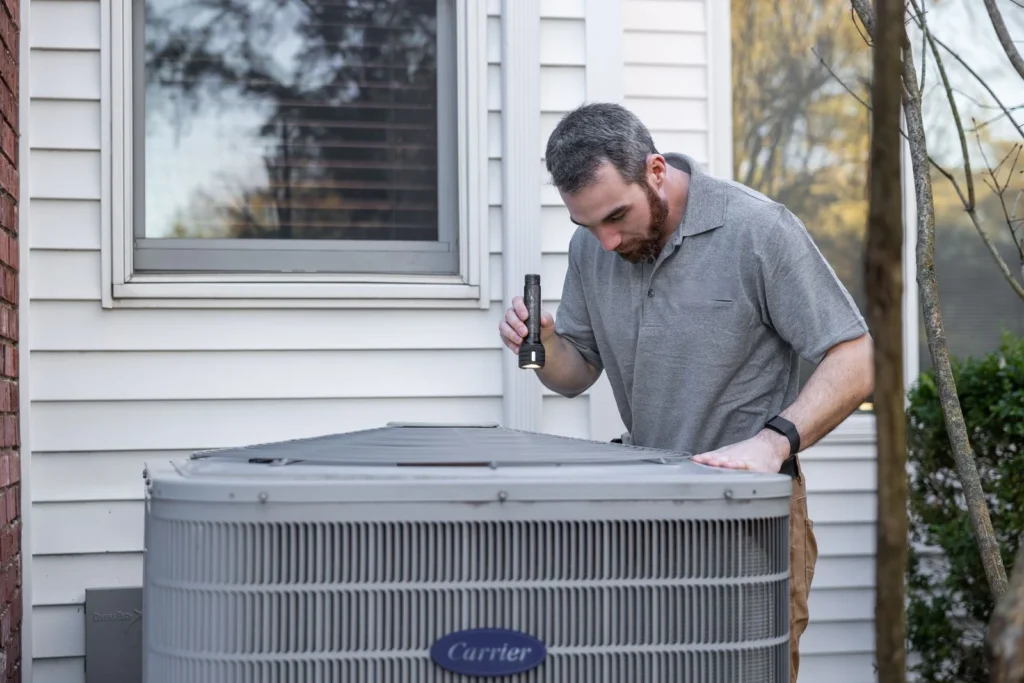
A technician arrives in a set window and checks both the indoor and outdoor unit, including the coil and wiring for salt corrosion.
03
The price in writing
You see the problem (photo or the failed part) and get the price in writing. Nothing is replaced until you approve it.
04
Numbers, not pressure
If repair doesn’t make sense, we tell you why with numbers, not pressure.
AC repair services
What does AC repair in Brunswick, GA include?
AC repair in Brunswick covers diagnosing and fixing any part of your cooling system: thermostat, indoor air handler, evaporator coil, drain line, ductwork, and the outdoor condenser with its capacitor, contactor, fan motor and compressor. A proper visit also checks refrigerant pressures, electrical connections, and salt-air corrosion on the coil, which coastal Glynn County homes see more than inland Georgia.
We repair:
Central air conditioners
Split systems, all major brands.
Heat pumps
The most common system in coastal Georgia homes because winters are mild.
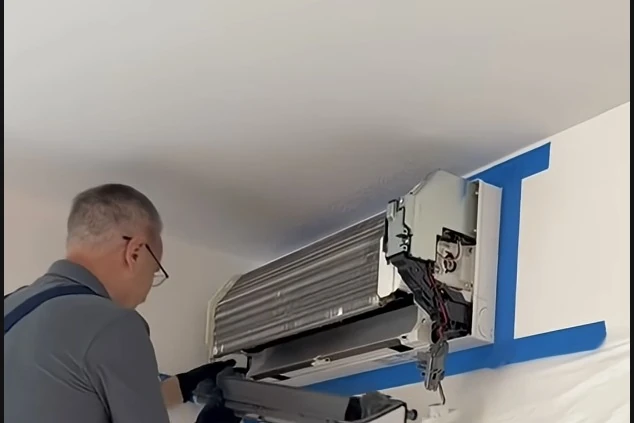
Ductless mini-splits
Common in Old Town’s older homes and additions without ducts.
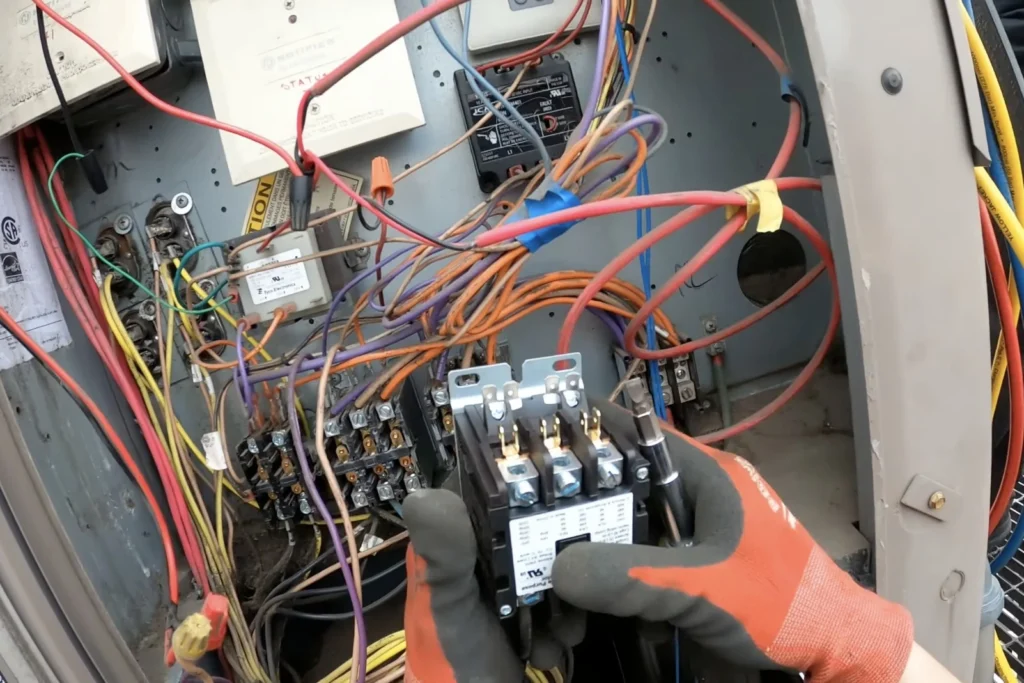
Packaged units
On rentals, small offices and mobile homes.
AC problem finder
What’s Wrong With Your AC? A Quick Symptom Checker
Find what your system is doing, try the safe check, and call if it doesn’t clear up.
AC Problem Finder
Answer 2 quick questions to see what it usually means, what you can safely try, and when to call.
1. What is your AC doing?
2. How long has this been going on?
What it usually means
What you can safely try
When to call
Every symptom at a glance
| What you notice | Likely cause | Safe check you can do | Call us when… |
|---|---|---|---|
| Running but not cooling | Dirty filter, failed capacitor, low refrigerant from a leak, dirty outdoor coil | Replace the filter; confirm thermostat is on COOL and below room temp | Still warm after 30 minutes |
| Outdoor unit hums, fan won’t spin | Capacitor or contactor | Turn the system off at the thermostat | Right away; running it this way can damage the compressor |
| Ice on the indoor coil or copper lines | Blocked airflow or low refrigerant | Turn cooling off, run the fan only to thaw | Ice comes back after thawing |
| Water on the floor or ceiling | Clogged drain line, full drain pan, failed float switch | Check the pan under the air handler; shut the system off if it’s overflowing | Any water near ceilings or wiring |
| Won’t turn on at all | Tripped breaker, dead thermostat, float switch tripped by a clog | Check the breaker once and thermostat batteries | Breaker trips again |
| Breaker keeps tripping | Shorted motor, failing compressor, bad wiring | Don’t reset it again | Right away |
| Turns on and off every few minutes | Oversized unit, low refrigerant, thermostat placement | Note how often it cycles | It’s constant or the house stays humid |
| Burning or electrical smell | Overheating motor or wiring | Shut it off at the thermostat and breaker | Immediately |
| Musty smell from vents | Mold in the coil, pan or ducts | Change the filter | Smell stays after a few days |
| House feels sticky at 74°F | Short cycling, oversized unit, airflow set too high | Check indoor humidity with a cheap hygrometer | Humidity stays above 50–60% |
| Electric bill jumped | Dirty coils, failing parts, leaky attic ducts | Compare to last summer’s Georgia Power bill | Jump with no change in use |
Why is my AC running but not cooling?
An AC that runs but doesn’t cool usually has a dirty air filter, a failed capacitor that stops the outdoor fan or compressor, a dirty outdoor coil, or a refrigerant leak. Start by replacing the filter and checking the thermostat is set to COOL. If the outdoor fan isn’t spinning or air stays warm after 30 minutes, turn it off and call a technician.
Why is there ice on my AC unit?
Ice on the indoor coil or the copper line means the coil got too cold, usually from blocked airflow (dirty filter, closed vents, dirty coil) or low refrigerant from a leak. Turn cooling off and run the fan to thaw it, which can take a few hours. Never chip the ice. If it freezes again, the system needs a leak or airflow diagnosis.
Why is my AC leaking water inside the house?
Indoor water leaks almost always come from a clogged condensate drain line, an overflowing drain pan, or a cracked pan. In Brunswick’s humidity your AC pulls gallons of water out of the air on a summer day, and algae clogs the line fast. Shut the system off if water is near a ceiling or wiring, then call to have the line cleared and the float switch checked.
Transparent pricing
Common AC Repairs and What They Cost
Most AC companies in the Golden Isles don’t publish prices. We think you should know the range before anyone shows up. These are typical 2026 U.S. ranges for parts and labor; your exact price depends on the brand, the unit’s size, access, and refrigerant type.
| Repair | What it does | Typical cost (2026, U.S.) | Brunswick note |
|---|---|---|---|
| Diagnostic / service call | Finds the problem | $75–$200 | Ask if it’s credited toward the repair |
| Capacitor replacement | Starts the compressor and fan | $100–$400 | #1 summer failure; heat and salt shorten its life |
| Contactor replacement | Switches the outdoor unit on/off | $100–$450 | Pitted or corroded contacts are common near the marsh |
| Drain line clearing | Stops indoor water leaks | $75–$250 | Algae grows fast in our humidity |
| Condenser fan motor | Moves heat out of the outdoor unit | $200–$700 | Unit hums but fan won’t spin |
| Thermostat repair/replace | Controls the system | $100–$500 | Check batteries and breaker first |
| Expansion valve (TXV) | Meters refrigerant | $300–$500 | Often misdiagnosed as “low freon” |
| Refrigerant leak repair | Finds and fixes the leak | $200–$1,500 | Salt corrosion can cause pinhole coil leaks |
| Refrigerant recharge | Adds refrigerant after a fix | $250–$900 | R-410A runs about $40–$75 per pound (Angi) |
| Evaporator coil | Indoor cooling coil | $1,000–$4,500 | Compare against replacement |
| Compressor | The heart of the outdoor unit | $1,000–$3,000+ | On older units, often the point to replace |
| Full system replacement (3-ton) | New outdoor + indoor equipment | about $9,800–$13,700 in Georgia | See repair vs. replace below |
Sources: 2026 national cost guides from HomeGuide, This Old House and Fixr; Georgia replacement range from regional installer pricing.
How much does AC repair cost in Brunswick, GA?
Most AC repairs in Brunswick fall between about $150 and $650 for common fixes like a capacitor, contactor or clogged drain line, plus a diagnostic fee of roughly $75–$200. Refrigerant leaks run $200–$1,500, and a compressor $1,000–$3,000 or more. Emergency, after-hours and holiday calls usually cost extra, so always ask before the visit.
What is the most common AC repair?
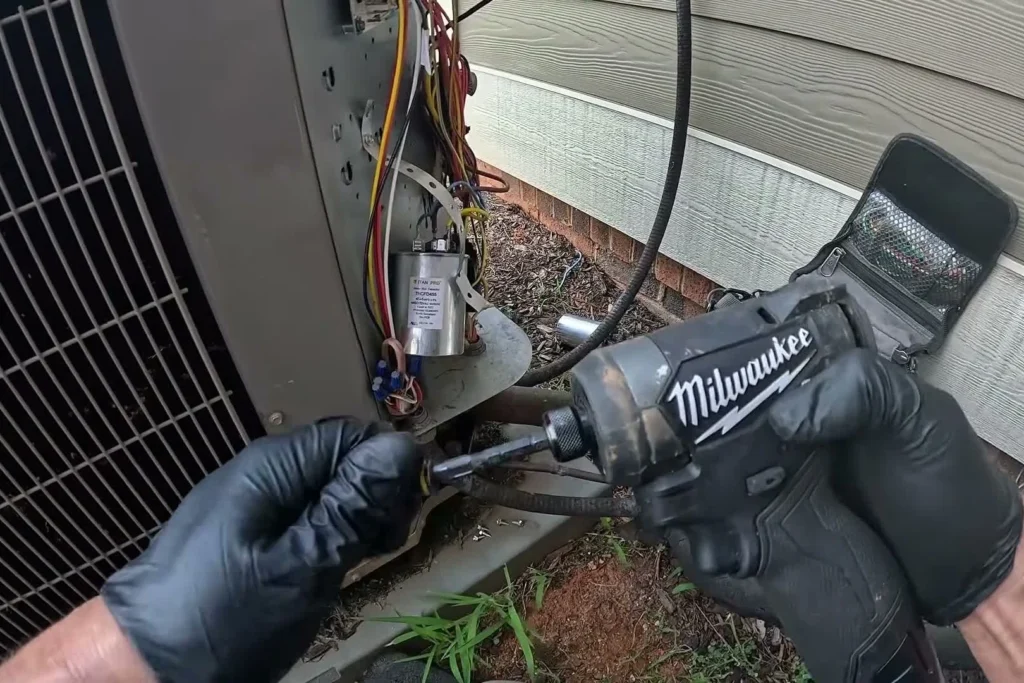
The most common AC repair is replacing a failed capacitor, the small part that gives the compressor and fan motor their starting push. Contactor failures come next. Both show the same symptom: the outdoor unit hums or clicks but the fan doesn’t spin. It’s usually a $150–$450 fix. Don’t touch it yourself; capacitors hold a dangerous charge even when the power is off.
What pushes the price up
- Refrigerant type. Older R-22 systems cost more to recharge because R-22 is no longer produced or imported in the U.S. (since 2020).
- After-hours timing. Nights, weekends and holidays in July cost more almost everywhere.
- Access. Attic air handlers in a 1960s ranch in August are slow, hot work.
- Corrosion. A salt-eaten coil or wiring can turn a small repair into a bigger one.
Built for the coast
Why ACs Fail Differently in Brunswick: Salt, Humidity, Storms and Older Homes
An AC in Brunswick works harder, and in a harsher setting, than the same unit in Atlanta. Four local conditions explain most of what we see:
01
Long, hot seasons with warm nights
Average highs stay above 82°F from May through September, and overnight lows stay above 72°F from June through September. Your system rarely gets a cool night to rest, so worn capacitors and fan motors fail in July and August, exactly when every company is booked.
02
Salt air from the marsh and the sound
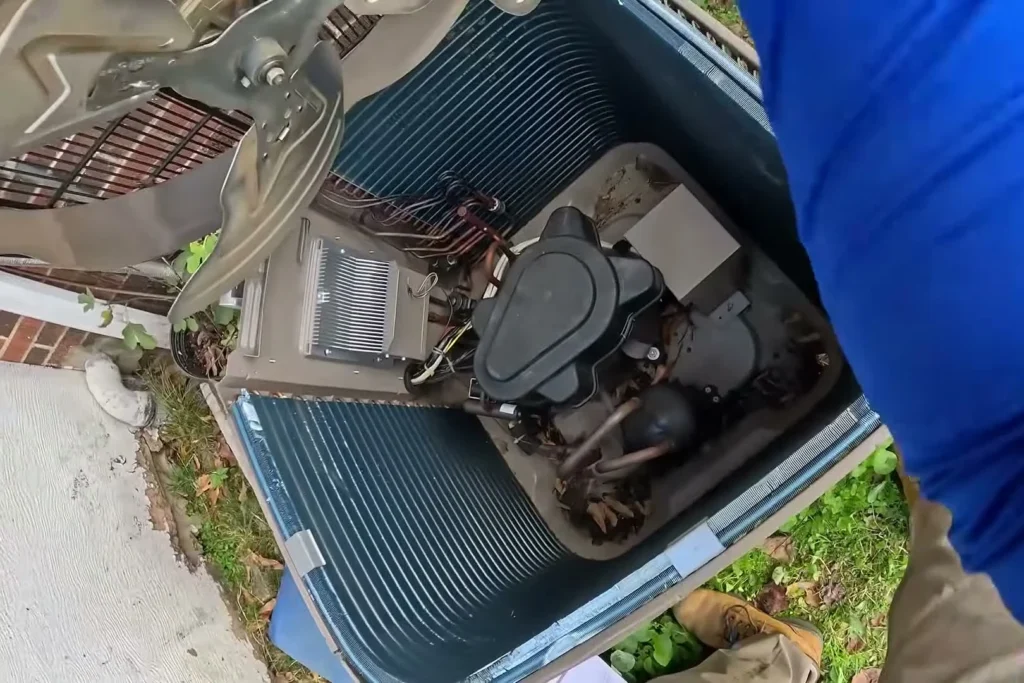
Homes along the marsh, near the causeway, on Blythe Island, Oak Grove Island, St. Simons and Jekyll breathe salty air. Salt settles on the outdoor coil’s aluminum fins and copper, on electrical terminals and on the cabinet. Over time it causes corrosion, pinhole refrigerant leaks and loose electrical connections.
03
Heavy humidity
Your AC isn’t only cooling; it’s pulling water out of the air. That’s why drain lines clog with algae, coils grow mold, and an oversized unit leaves the house cold but sticky. The EPA recommends keeping indoor humidity between 30% and 50%.
04
Storms and outages
Hurricanes and tropical storms such as Matthew (2016), Irma (2017), Idalia (2023) and Helene (2024) brought wind, flooding or long power outages to coastal Georgia. Flood water, debris and power surges when the grid comes back are hard on outdoor units and control boards.

And the houses themselves
Brunswick’s median home was built around 1961. Many older homes in Old Town and the South End have original or patched ductwork in hot attics or damp crawlspaces, and some historic Victorians on and around Union Street were never built for central ducts at all. Leaky ducts and undersized returns make a healthy AC look broken.
Does salt air damage AC units in Brunswick?
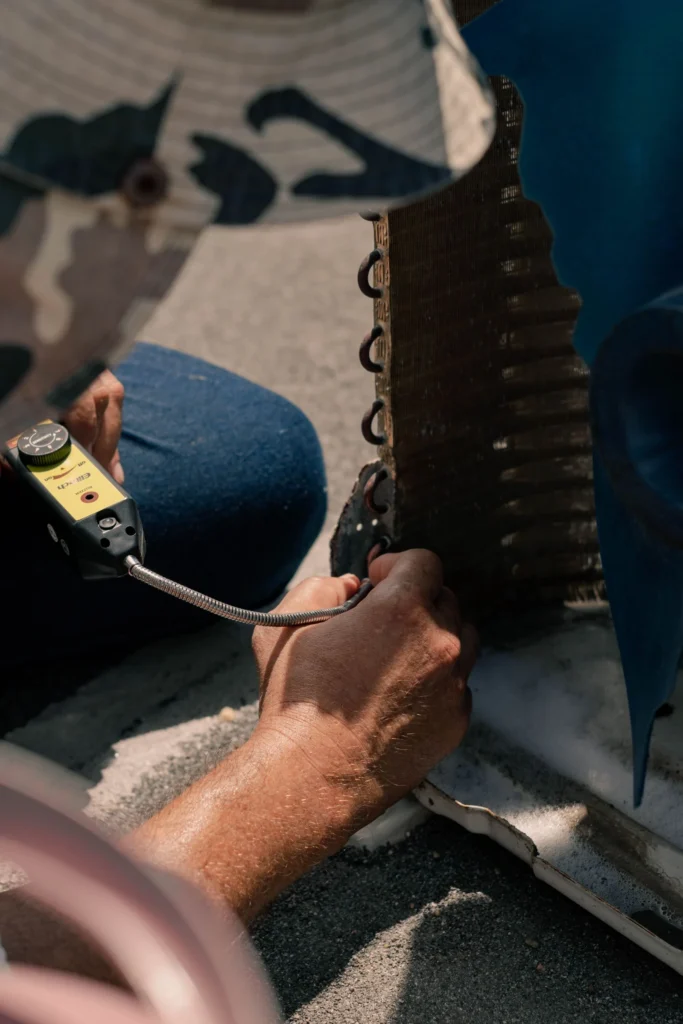
Yes. Salt air from the marshes and the ocean corrodes the outdoor unit’s coil fins, copper tubing and electrical terminals, which can cause refrigerant leaks, lost efficiency and failed parts sooner than inland. Homes on the islands and along the marsh see it most. Rinse the outdoor coil gently with fresh water a few times a season and ask for a corrosion check at every service.
Coastal care checklist:
- Rinse the outdoor coil from the inside out with a garden hose, low pressure, power off first.
- Keep 2 feet of clearance around the outdoor unit; trim plants that trap salt and moisture.
- Ask about coated coils or coastal-rated equipment when you replace.
- Have terminals and the contactor inspected every service; corrosion shows up there first.
Why is my house humid even with the AC on?
A house that stays humid with the AC running usually has an oversized unit that cools the air too fast and shuts off before it removes moisture, a fan set to ON instead of AUTO, leaky ducts pulling in damp attic or crawlspace air, or low refrigerant. In Brunswick’s climate this matters for comfort and mold. Aim for 30–50% indoor humidity; a $15 hygrometer will tell you where you stand.
Emergency AC repair
Emergency AC Repair in Brunswick
When it’s 95°F outside and the house is climbing past 85°F, waiting until Monday isn’t a plan. Call (912) 555-0142 and tell us who’s in the home. We prioritize calls with elderly residents, infants, anyone with a medical condition, and pets left in the heat. See the full emergency AC guide →
Is a broken AC an emergency?
A broken AC is an emergency when the indoor temperature is rising into the high 80s or above and someone at home is elderly, very young, pregnant, ill or on medication that affects heat tolerance. It’s also urgent if you smell burning, see water near wiring, or the breaker keeps tripping. If a person shows signs of heat illness, like confusion or fainting, call 911 first.
Nearly one in five Brunswick residents is 65 or older, which is why we take indoor heat seriously on every call.
Call us right away if:
- You smell burning plastic or electrical odor from vents or the outdoor unit
- The breaker trips more than once
- Water is dripping from a ceiling, light fixture or near the air handler’s wiring
- The outdoor unit is buzzing loudly but not running
- Indoor temperature is above 85°F with a vulnerable person at home
- The unit was under flood water or hit by debris after a storm (don’t turn it on)
What should I do while waiting for AC repair?
While you wait, turn the AC off at the thermostat so a failing part doesn’t damage the compressor. Close blinds on sunny windows, run ceiling fans, keep everyone drinking water, and move to the coolest room, usually the lowest floor. Don’t keep resetting a breaker or spray anything on the unit. Check on elderly neighbors, and keep pets indoors in the coolest space.
Don’t:
- Push the outdoor fan with a stick to start it. It’s a known field trick, but it means a part has failed, and you can get hurt by the blades or the electrical charge.
- Add refrigerant from an auto-parts store can. Home systems aren’t car systems, and handling refrigerant legally requires EPA certification.
- Pour bleach into the drain pan with the system running. Ask us how to clean the line safely.
How a visit works
Our Process: How a Repair Visit Works
The biggest complaint people have about AC companies isn’t the heat. It’s not knowing if they’re being told the truth. So every visit follows the same steps, and you see each one.
1
You call, we ask the right questions.
What’s it doing, how old is it, when was it last serviced. We’ll walk you through the breaker, filter and thermostat first, because sometimes that’s all it is.
2
You get an arrival window and a name.
You know when to expect us and who is coming.
3
Indoor check.
Thermostat, filter, air handler, evaporator coil, drain line and float switch.
4
Outdoor check.
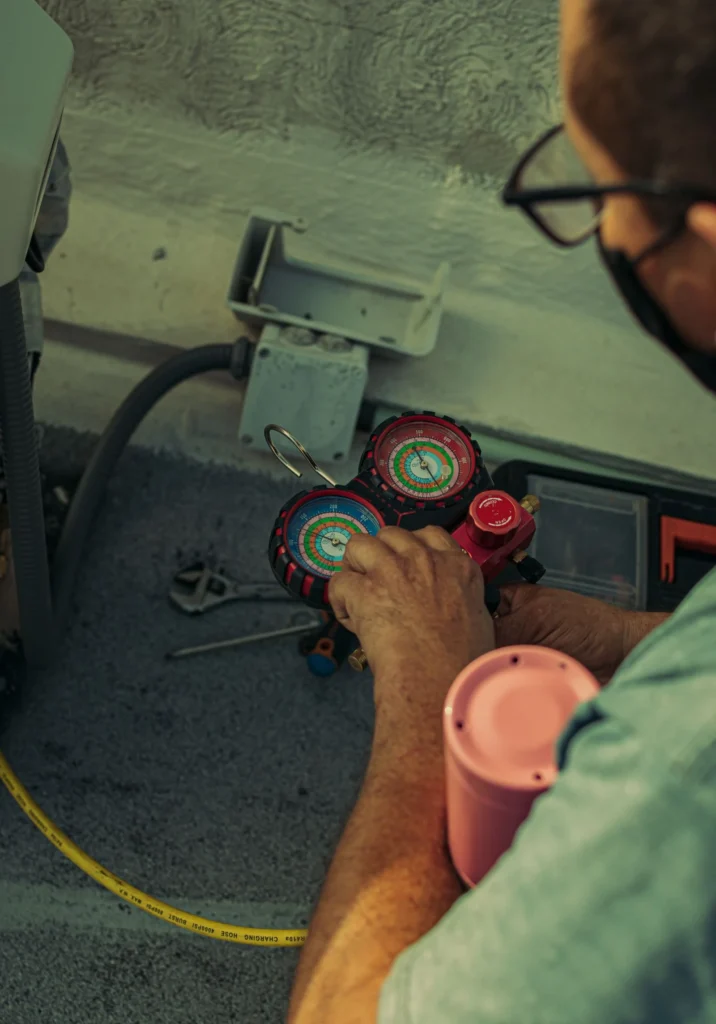
Capacitor, contactor, fan motor, coil condition, refrigerant pressures, amp draw, and salt corrosion on terminals and fins.
5
You see the problem and the price.
A photo or the failed part, plus a written quote. If repair vs. replace is close, you get both options with numbers.
6
We fix only what you approve.
No surprise add-ons, no work you didn’t sign off on.
7
We test it.
Temperature drop across the coil, pressures, drain flow, a full thermostat cycle.
8
You keep the old part and get coastal care tips.
Plus the warranty terms in writing.
How do I know an AC company isn’t upselling me?
An honest AC company shows you the failed part or a photo of it, explains what it does, and gives a written price before starting. Be cautious if a technician says you need a new system without testing, recommends refrigerant without finding the leak, or pressures you to decide on the spot. On a newer unit, most single-part failures are repairable. You can always get a second opinion.
Your quote checklist
- Is the price written, itemized (part, labor, refrigerant in pounds), and given before work?
- Did they name the failed part and show it to you?
- If refrigerant was added, did they find and fix the leak, or just top it off?
- Is the diagnostic fee credited toward the repair?
- Are the parts and labor warranties written down?
- Is the contractor licensed with the Georgia Division of Conditioned Air Contractors?
What Good AC Service Looks Like vs. the Red Flags
| What you should expect | Red flags to watch for | |
|---|---|---|
| Pricing | Diagnostic fee told upfront; written quote before work | “We’ll see when we get there”; price changes after the job |
| Diagnosis | Tests electrical parts and pressures; shows you the problem | “You need a new system” within minutes, without testing |
| Refrigerant | Finds the leak, quotes the repair, charges by the pound | Repeated “top-offs” every summer; quoting in “gallons” |
| Repair vs. replace | Both options with numbers, your choice | Pressure, “today only” deals |
| Coastal knowledge | Checks salt corrosion, suggests rinsing and coated coils | Ignores the outdoor coil condition |
| Paperwork | License number, warranty terms, old part returned | No license number, no written warranty |
| Follow-up | Clear return-visit policy if the same problem comes back | “That’s a new problem” every time |
Repair or replace
Repair or Replace? An Honest Way to Decide
A newer unit with one failed part should almost always be repaired. An old system with a major failure usually shouldn’t. The hard calls sit in between, and we’ll show you the math either way.
What is the $5,000 rule for AC?
The $5,000 rule is an HVAC rule of thumb: multiply your AC’s age in years by the repair cost. If the result is over $5,000, consider replacing; if it’s under, repair usually makes sense. Example: a 12-year-old unit with a $500 repair gives $6,000, so replacement is worth pricing. It’s a starting point, not the whole decision.
What the rule doesn’t account for: refrigerant type, how often the unit has failed lately, corrosion on the coil, your energy bills, and how long you plan to stay in the house.
$5,000 Rule Calculator
$6,000
| Factor | Leans toward repair | Leans toward replace |
|---|---|---|
| Age | Under about 10 years | 15+ years |
| $5,000 rule | Under $5,000 | Over $5,000 |
| Failure | Capacitor, contactor, fan motor, drain, thermostat | Compressor or evaporator coil on an older unit |
| Refrigerant | R-410A or newer | R-22 (no longer produced, costly to recharge) |
| History | First repair in years | Repairs every summer |
| Coil condition | Clean, solid fins | Heavy salt corrosion, repeated leaks |
| Comfort | House cools evenly | Hot rooms, sticky air, rising bills |
| Your plans | Selling soon, tight budget this month | Staying 5+ years |
Should I repair or replace a 15-year-old AC?
At 15 years, repair small failures like a capacitor, contactor or drain line, since they’re inexpensive and can buy you more seasons. If a 15-year-old unit needs a compressor, evaporator coil or a major refrigerant leak fix, replacement is usually the better value. That’s especially true if it uses R-22 or shows salt corrosion. Central ACs are commonly expected to last about 15–20 years nationally.
A note on refrigerants
New systems are moving from R-410A to lower-impact refrigerants such as R-454B and R-32. If you’re replacing, ask which refrigerant the new unit uses and whether your indoor coil and line set are being replaced to match.
Common repairs
Three Common Brunswick AC Repairs, Start to Finish
How these jobs are diagnosed, priced and fixed in Glynn County homes.
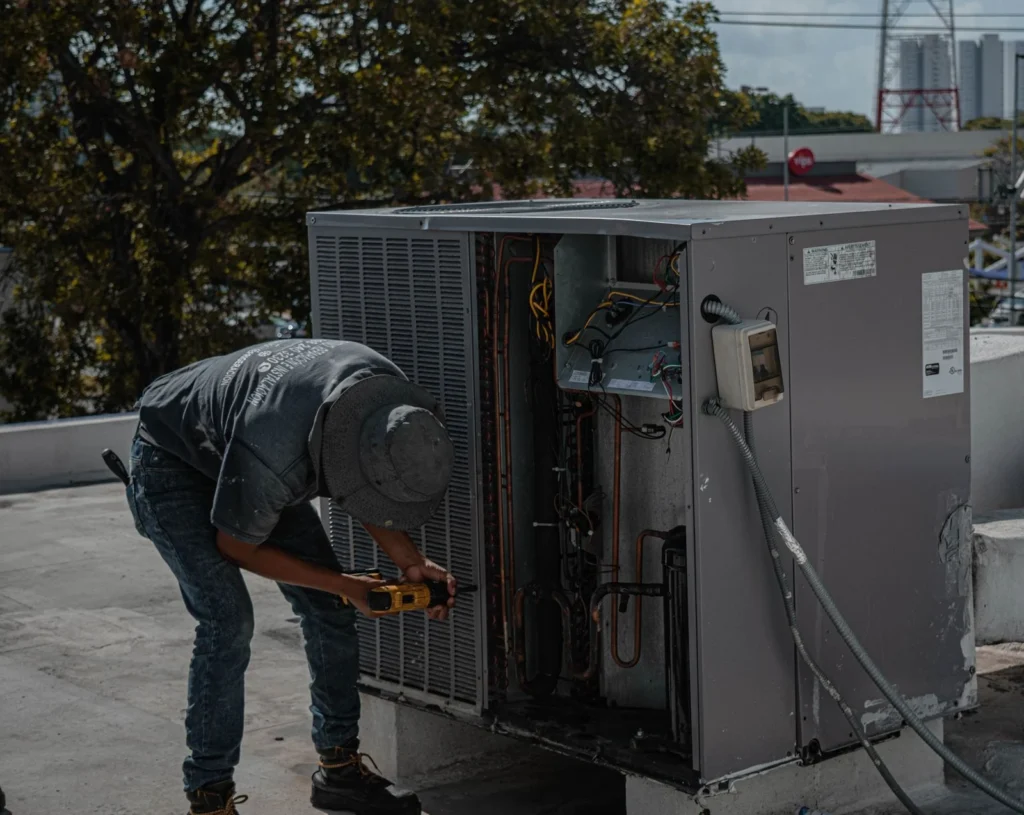
Marsh-front home, outdoor fan humming in July
The situation: A 9-year-old heat pump on a home backing onto the marsh. Outdoor unit hums, fan doesn’t spin, house is at 84°F by mid-afternoon.
What’s found: A failed run capacitor and a contactor with pitted, corroded contacts. Salt film on the coil and terminals.
The fix: Replace the capacitor and contactor, clean the terminals, rinse the coil, check pressures and amp draw.
Typical cost: About $250–$600 for both parts plus the visit.
The takeaway: On the marsh, corrosion speeds up electrical failures. A yearly terminal and contactor check catches this before the hottest week of summer.
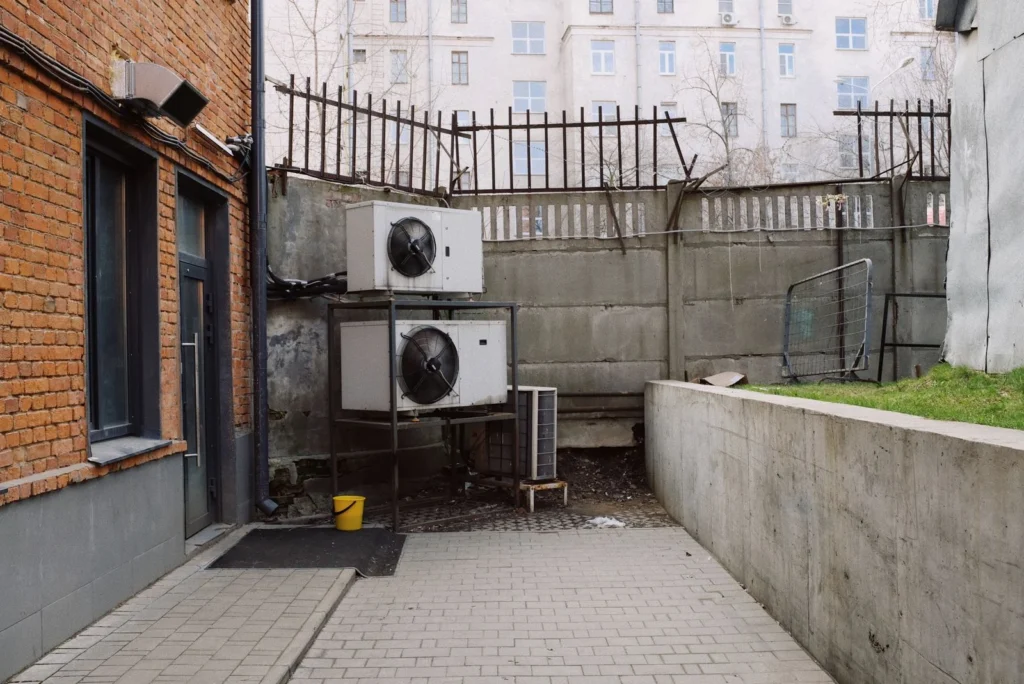
Renter in a 1960s duplex, water through the hallway ceiling
The situation: A tenant notices a brown stain spreading on the hallway ceiling under the attic air handler. AC still running.
What’s found: Condensate drain line clogged with algae; the drain pan overflowed, and there was no working float switch to shut the system off.
The fix: Clear and flush the line, install a float switch, document the damage with photos for the landlord.
Typical cost: About $150–$400, plus any drywall repair by others.
The takeaway: In our humidity, drain lines need regular flushing. Renters should report leaks to the landlord in writing right away.
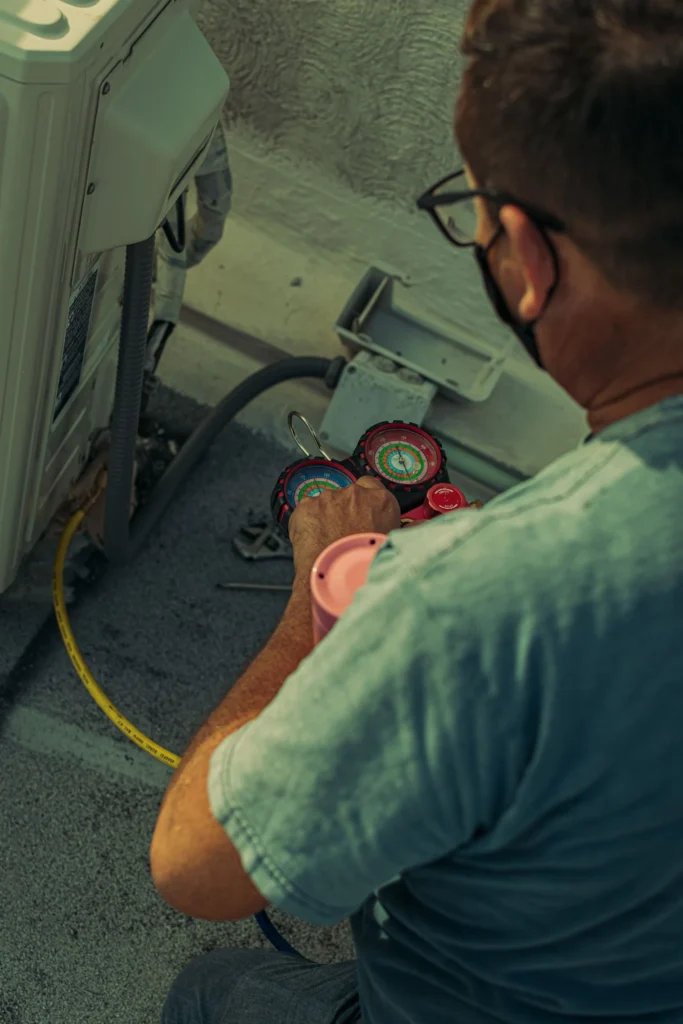
16-year-old R-22 system, not cooling after a storm season
The situation: An older home in North Glynn. The AC runs but blows warm air; it was “topped off” with refrigerant the last two summers.
What’s found: A refrigerant leak in a corroded outdoor coil, and an R-22 system. The $5,000 rule: 16 years × a leak repair and recharge of about $1,200 = $19,200.
The options: Two written options: the repair price, with the honest note that R-22 is expensive and the leak could return, and replacement pricing with a coastal-rated unit.
Typical cost: About $1,000–$1,500+ to repair vs. roughly $9,800–$13,700 to replace a 3-ton system in Georgia.
The takeaway: Repeated top-offs mean a leak nobody fixed. On an old R-22 system, replacement usually costs less over the next few years.
Rentals
For Renters and Landlords in Brunswick
More than half of Brunswick homes are rented, so a lot of AC calls start with “my landlord…” or “my tenant…”. We work with both. Landlords and property managers get photo documentation and written findings for every job; vacation-rental owners on St. Simons and Jekyll get turnaround planned around guest check-ins.
For renters
Does my landlord have to fix my AC in Georgia?
Georgia law doesn’t require landlords to provide air conditioning. But if your rental came with AC, the landlord is responsible for repairing it. Under the Safe at Home Act, which applies to leases signed or renewed on or after July 1, 2024, rentals must be fit for human habitation. Report the problem in writing, keep copies, and contact Georgia Legal Aid before withholding rent. This isn’t legal advice.
Help paying
Can I get help paying for AC repair in Glynn County?
Possibly. The federal Low Income Home Energy Assistance Program (LIHEAP) is handled locally by the Coastal Georgia Area Community Action Authority (CGACAA) and mainly helps with energy bills; ask them what cooling help is available this season. You can also ask Georgia Power about payment programs, and ask your contractor about financing for larger repairs.
Service area
Areas We Serve Around Brunswick and the Golden Isles
City of Brunswick
- Old Town Historic District
- Downtown and Newcastle Street
- The South End
- Peninsula Park
North and west Brunswick
- Dock Junction
- Country Club Estates
- Sterling
- Glynco
- The Lakes at North Glynn
- Windwood Estates
- Carriage Gate Plantation
Along the rivers and marsh
- Oak Grove Island (Turtle River)
- Blythe Island
- Thalmann
- Everett
The islands
- St. Simons Island and Sea Island
- Jekyll Island
ZIP codes: 31520, 31523, 31525 (Brunswick), 31522 (St. Simons Island), 31527 (Jekyll Island)
Do you repair ACs on St. Simons Island and Jekyll Island?
Yes. We service homes, condos and vacation rentals on St. Simons Island, Sea Island and Jekyll Island. Island homes face the heaviest salt exposure in Glynn County, so we pay extra attention to coil corrosion, electrical terminals and outdoor unit placement. Tell us your causeway and gate access details when you book so the technician arrives ready.
Accountable in writing
Accountable, In Writing
Every repair starts with a written quote, and the warranty terms come in writing too.
How do I check if an HVAC contractor is licensed in Georgia?
In Georgia, AC contractors are licensed by the Division of Conditioned Air Contractors under the State Construction Industry Licensing Board. Use the Georgia Secretary of State’s online Licensee Search with the company or contractor name. License numbers start with CR (Conditioned Air Restricted) or CN (Non-Restricted). You can also file a complaint about licensed or unlicensed work through the same office.
How often should I service my AC in coastal Georgia?
Service your AC at least once a year, ideally in March or April before the long cooling season starts. Coastal homes, especially on the marsh or the islands, benefit from a corrosion check on the coil and electrical terminals at every visit, plus a fresh-water rinse of the outdoor coil a few times a season. Change 1-inch filters every one to three months.
FAQ
Frequently Asked Questions
Can I just add refrigerant to my AC?
No. Refrigerant doesn’t get used up; if it’s low, there’s a leak. Adding more without fixing the leak means paying again next summer, and handling refrigerant legally requires EPA certification. Ask for a leak search and a price per pound.
What temperature should I set my AC to in summer?
The U.S. Department of Energy suggests 78°F when you’re home and need cooling, and warmer when you’re away. Setting the thermostat far lower won’t cool the house faster. In Brunswick’s humidity, many people are comfortable a little warmer if humidity stays under 50%.
What is the 3-minute rule for AC?
It’s the practice of waiting a few minutes after the AC shuts off before turning it back on, so pressures in the system can equalize and the compressor doesn’t restart under strain. Many thermostats build in this delay. If your unit keeps restarting quickly on its own, that’s short cycling and worth a service call.
Does homeowners insurance cover AC repair?
Usually not for normal wear and tear or age-related failures. Damage from a covered event, such as a storm, falling tree or lightning, may be covered depending on your policy. After a storm, photograph the unit before any work and call your insurer.
How long does AC repair take?
Common repairs like a capacitor, contactor or drain line usually take about an hour once the technician is on site. Leak repairs, motor replacements or parts that must be ordered can take longer or need a second visit.
What should I check before calling for AC repair?
Check that the thermostat is on COOL and set below room temperature, replace a dirty filter, look for a tripped breaker (reset once only), and check whether the drain pan is full. If none of that helps, call.
Do you charge a diagnostic fee?
Most AC companies charge one. You’ll always know the fee before we arrive, and whether it’s credited toward the repair.
Is R-22 refrigerant still available?
R-22 is no longer produced or imported in the U.S. as of 2020. Only recovered or stockpiled supply remains, which keeps recharges expensive. That’s a big factor in repair-or-replace decisions on older systems.
Get Your AC Fixed Today
Tell us what your AC is doing, and we’ll tell you what it likely is, what it costs, and when we can be there.